What Makes Peanut Ultrafine Grinding Difficult for Conventional Mills?
Grinding peanuts into fine, uniform powder is more complicated than processing ordinary grains. Their high oil content creates practical challenges for conventional mills, including material sticking, screen blockage, temperature rise, and inconsistent particle sizes. These problems become more noticeable when production requires fine powder below 100 mesh or continuous industrial output. At Xingshengwei, we address these challenges through a specialized Peanut Ultrafine Grinder that combines high-speed impact grinding, airflow classification, and closed-loop dust collection. This article explains why conventional grinding equipment struggles with peanuts and which technical factors matter when selecting an industrial grinding solution.
Table of Contents
- Why Is Peanut Ultrafine Grinding Difficult?
- Common Problems with Conventional Grinding Mills
- How Specialized Grinding Technology Solves These Problems
- Key Parameters of an Industrial Peanut Ultrafine Grinder
- Where Is Peanut Ultrafine Grinding Used?
- What Should You Consider When Selecting Grinding Equipment?
- Frequently Asked Questions
Why Is Peanut Ultrafine Grinding Difficult?
Peanuts contain considerably more natural oil than many conventional grain materials. During mechanical grinding, friction and impact generate heat, while released oil can make fine particles adhere to grinding surfaces, screens, and internal chamber walls.
In our experience, the challenge is not simply reducing peanut particle size. It is maintaining stable material movement and consistent powder quality throughout continuous production. When the grinding fineness increases, the material becomes more sensitive to heat accumulation and adhesion.
Three material characteristics make peanut ultrafine grinding particularly demanding:
- High oil content: Released peanut oil can cause powder adhesion, material buildup, and blockage inside conventional grinding chambers.
- Temperature sensitivity: Excessive frictional heat may accelerate oil oxidation and affect the natural aroma and quality of peanut powder.
- Fine particle requirements: Producing powder with a narrow particle size distribution requires effective classification rather than relying on grinding speed alone.
These characteristics explain why ordinary grain pulverizers may struggle to maintain stable performance when processing peanuts into fine powder. A suitable high-oil material grinding machine needs to coordinate crushing, temperature management, and particle classification.
Common Problems with Conventional Grinding Mills
Conventional hammer mills and other general-purpose crushers can handle many dry agricultural materials. However, their performance may become unstable when processing high-oil raw materials such as peanuts, sesame seeds, and walnuts, especially at finer grinding levels.
| Common Problem | Technical Cause | Impact on Production |
|---|---|---|
| Material Sticking | Oil released during crushing adheres to internal surfaces and fine particles. | Material accumulation, cleaning requirements, and reduced operating efficiency. |
| Screen or Passage Blockage | Fine oily powder builds up around screens and discharge passages. | Unstable material flow and interruptions during continuous production. |
| Excessive Temperature Rise | High-speed friction and repeated crushing generate heat. | Potential oil oxidation and changes in peanut powder flavor. |
| Uneven Particle Size | Conventional crushing systems may lack precise particle classification. | Inconsistent powder fineness and additional processing requirements. |
| Powder Loss and Dust | Insufficient collection and filtration systems allow fine particles to escape. | Lower material utilization and a less controlled workshop environment. |
Increasing motor power alone does not solve these problems. In some cases, higher mechanical energy input can increase frictional heat without improving final powder quality. We therefore consider the grinding chamber, airflow circulation, classification system, and cooling structure together when designing equipment for peanut processing.
How Specialized Grinding Technology Solves These Problems
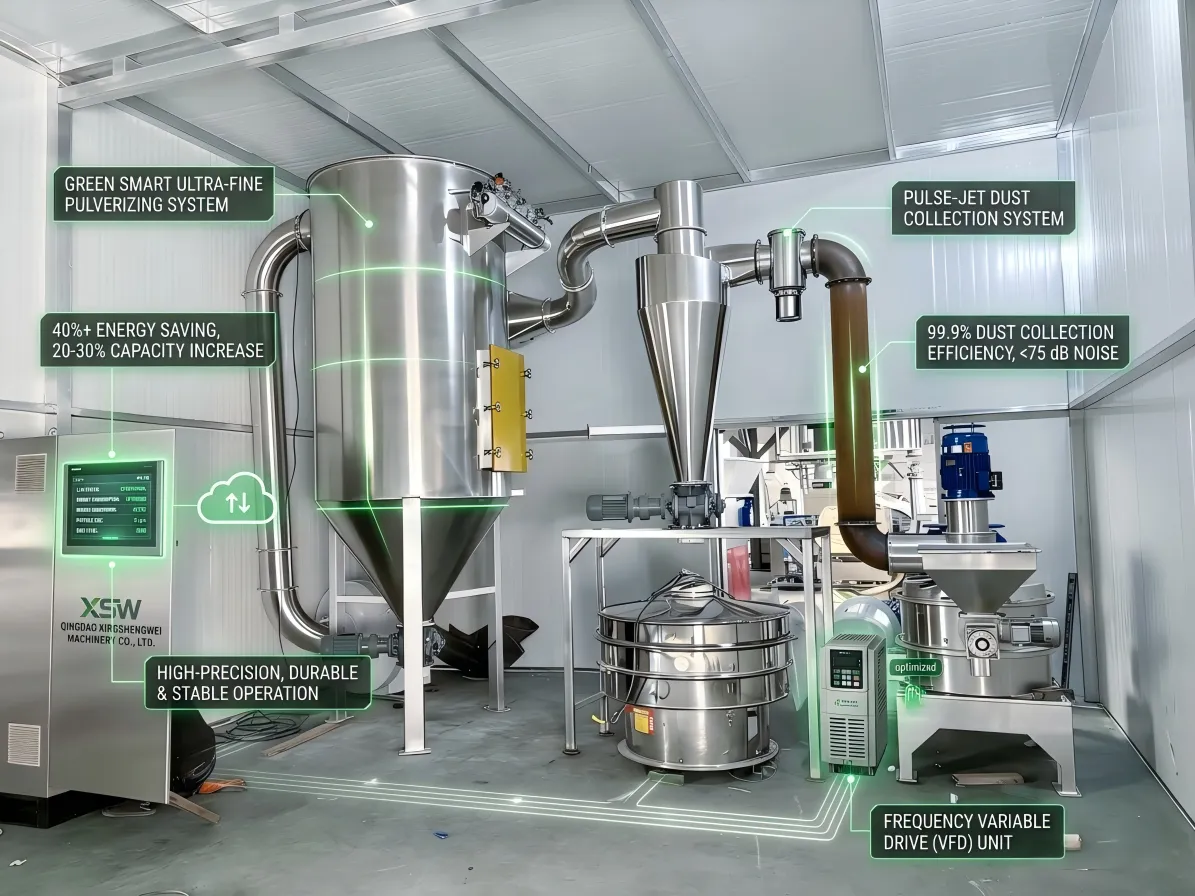
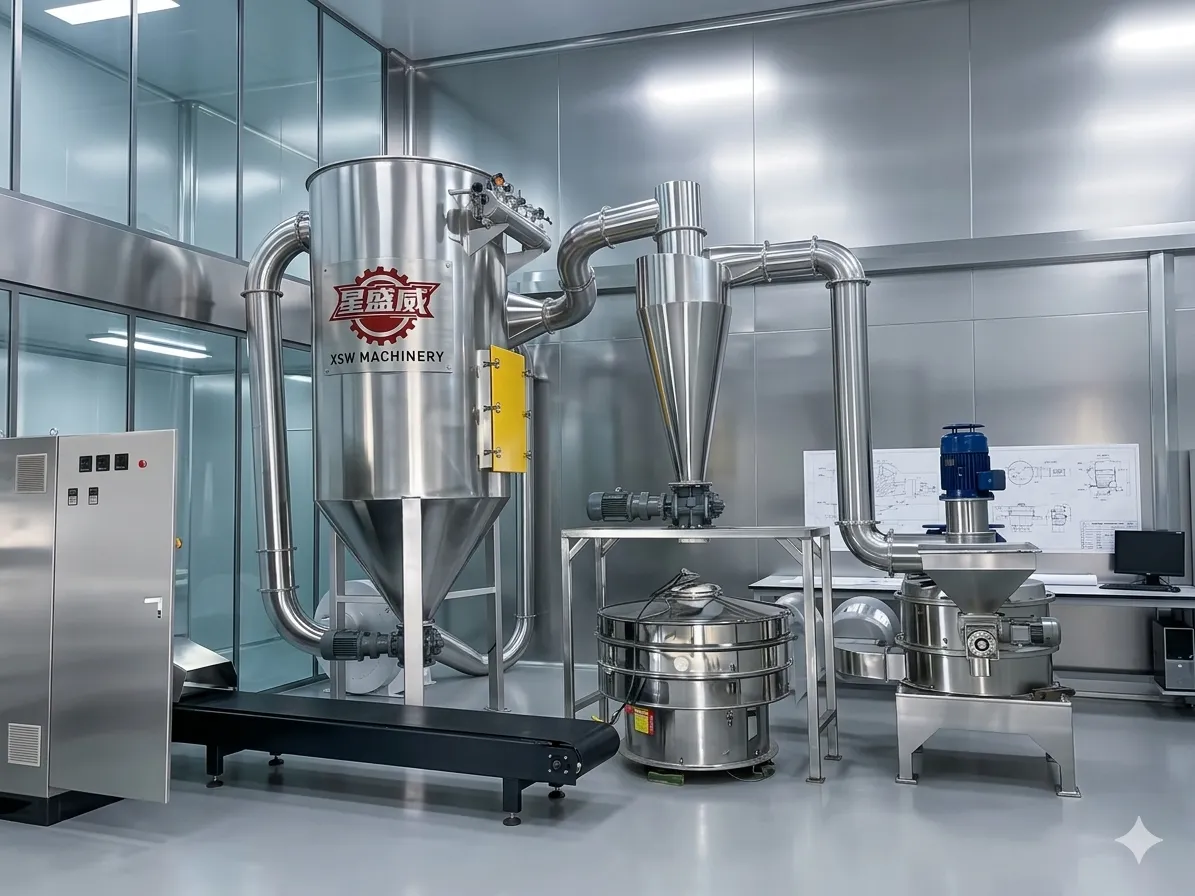
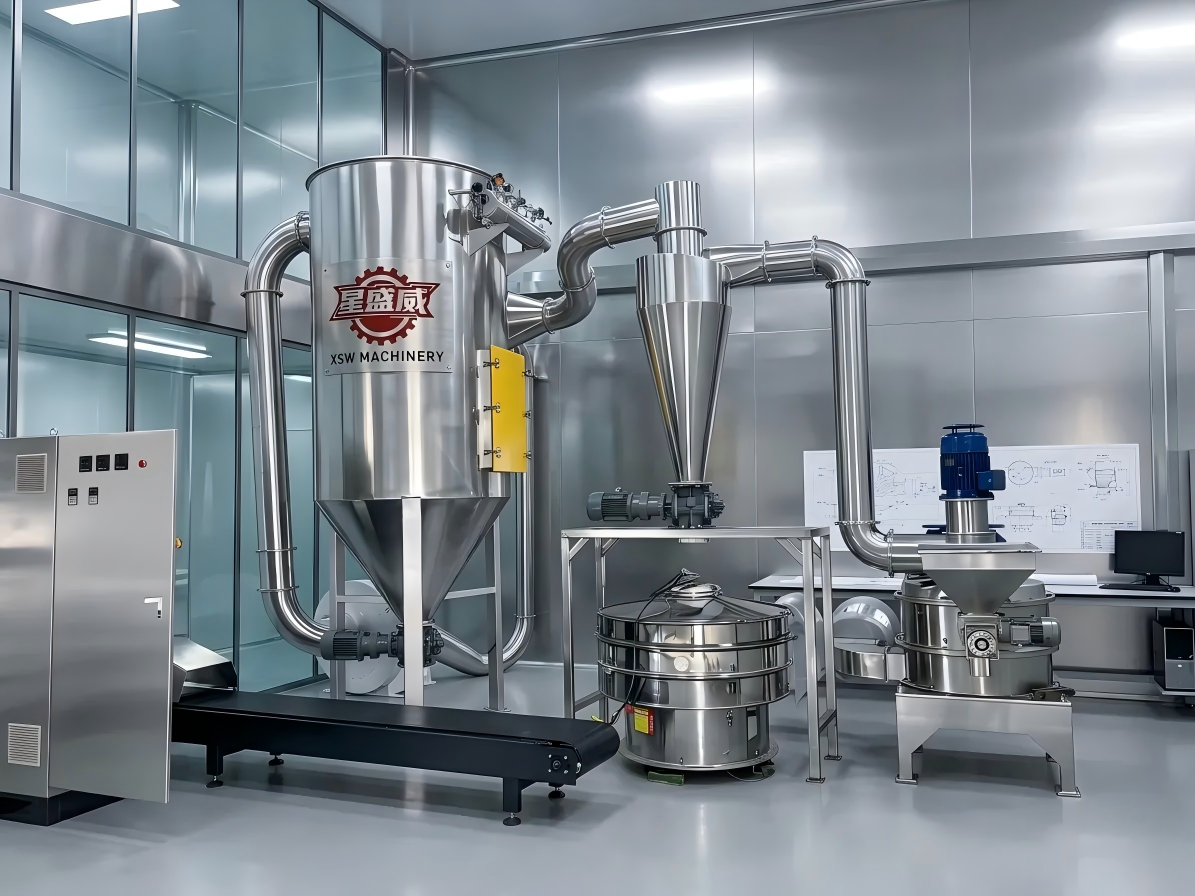
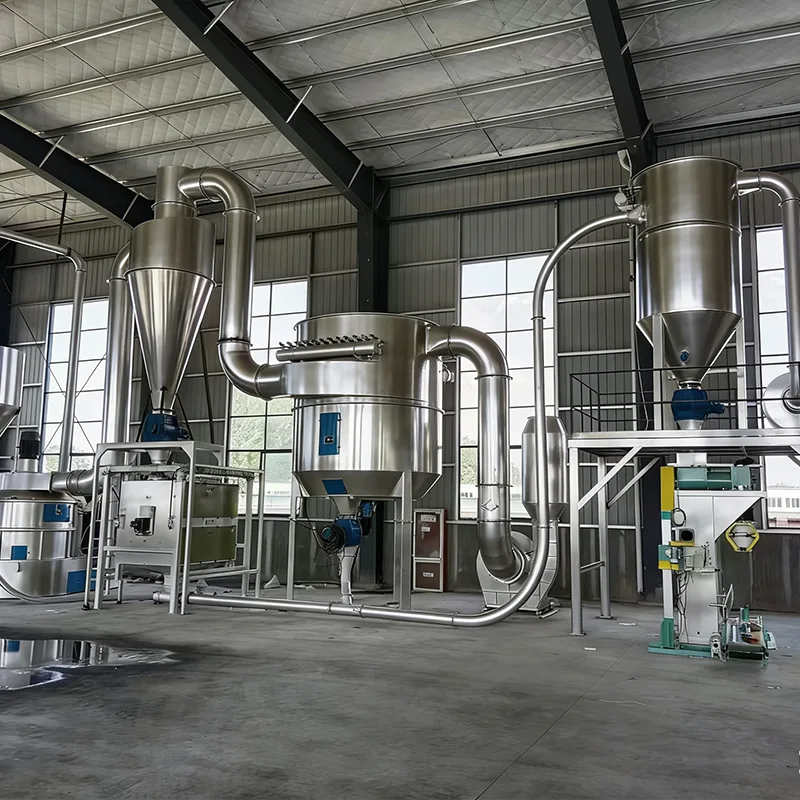
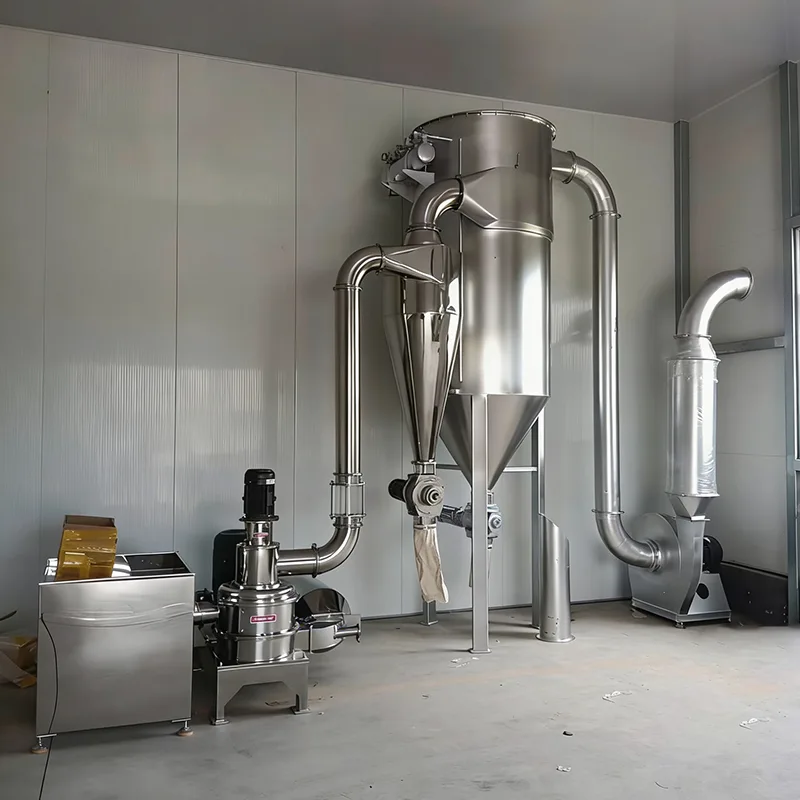
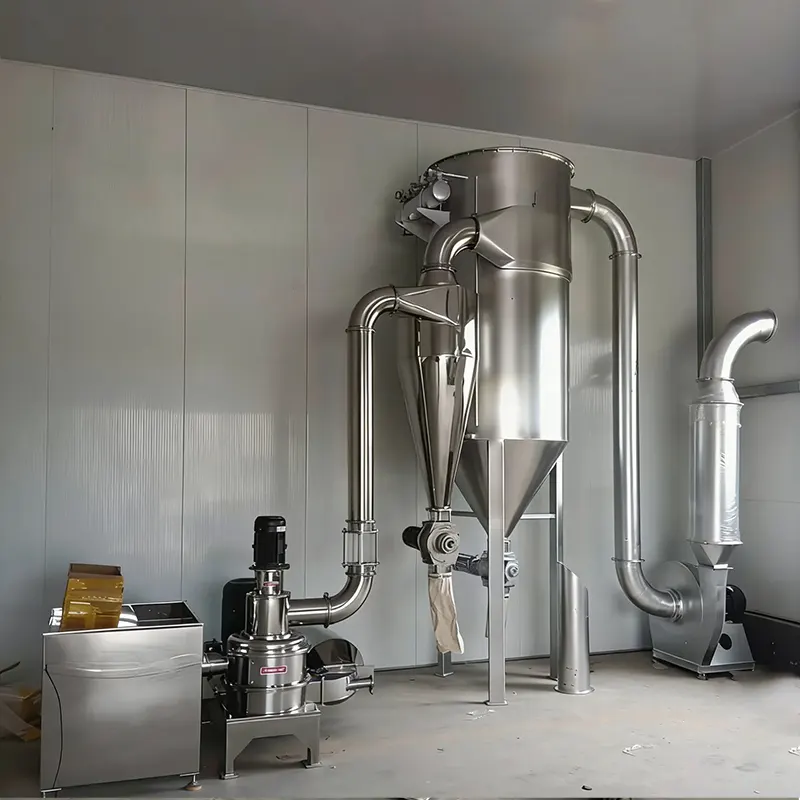
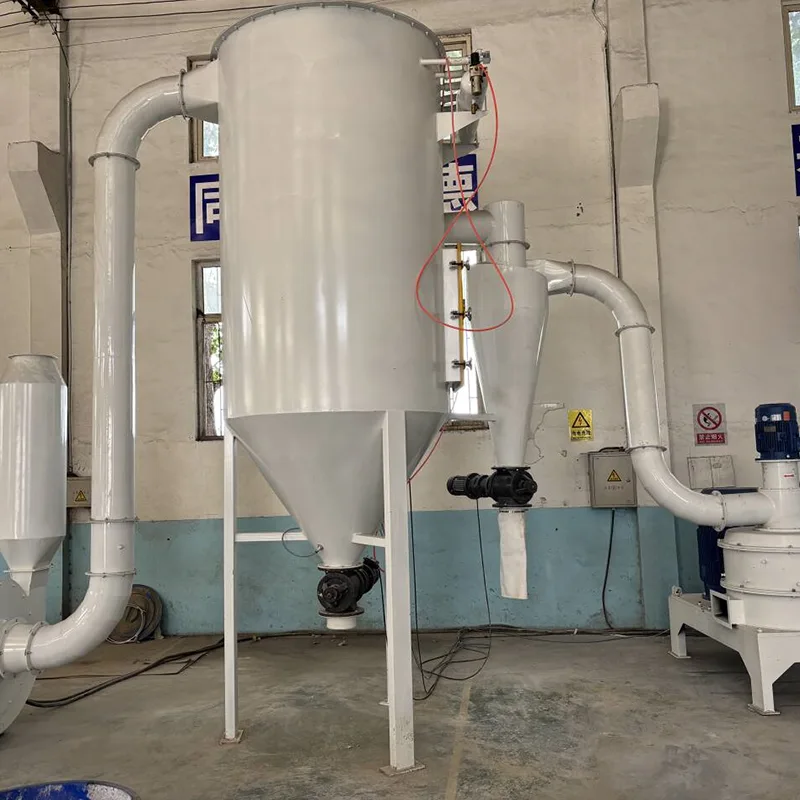
Our Peanut Ultrafine Grinder from Xingshengwei uses a coordinated process of high-speed impact grinding, airflow classification, and closed-loop dust collection. The design focuses on controlling material adhesion, maintaining a suitable discharge temperature, and producing consistent fine powder.
1. Optimized Grinding Structure for High-Oil Materials
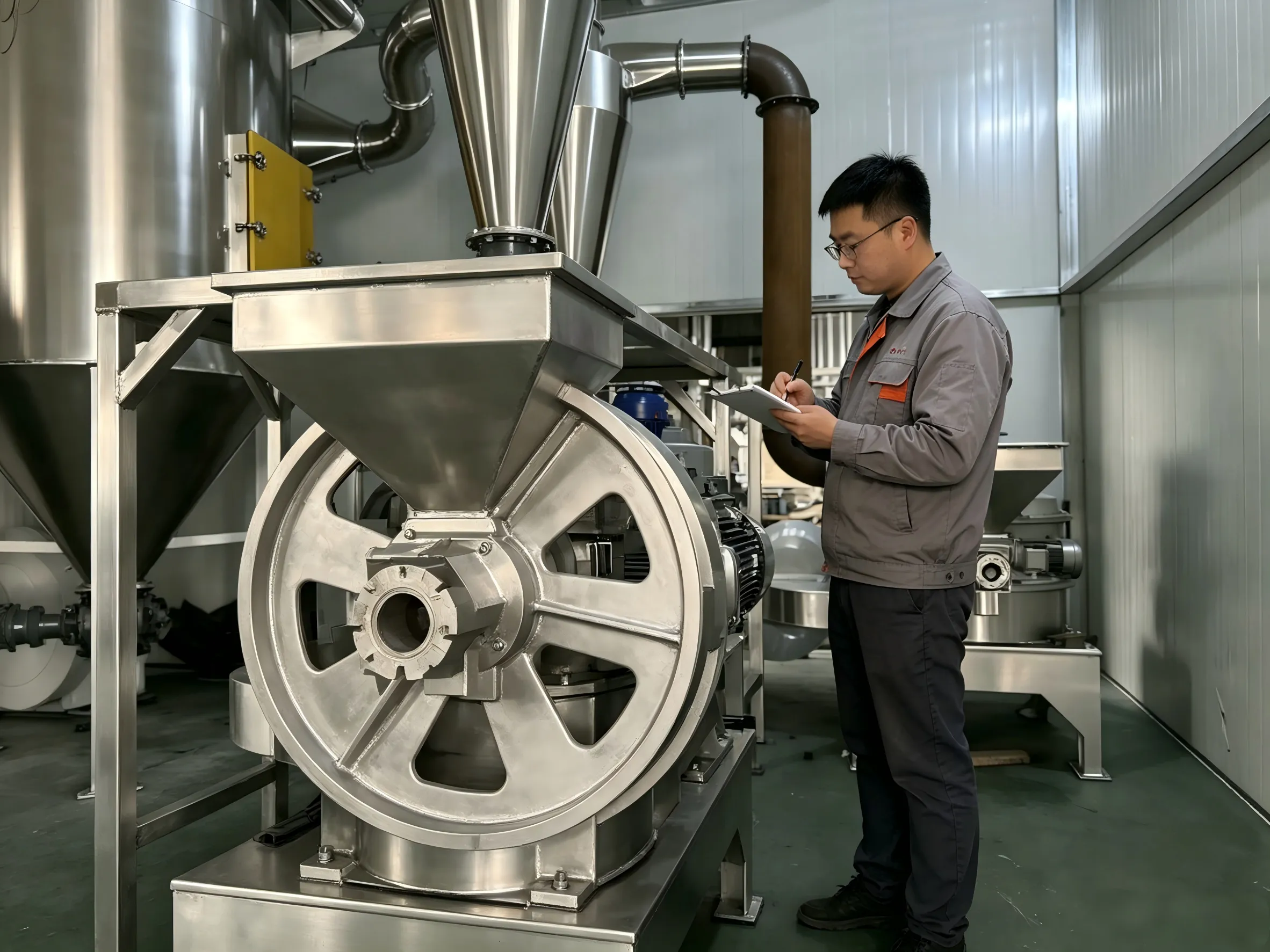
The grinding system combines customized wear-resistant silicon alloy hammerheads with replaceable grinding discs. The hammerheads have a hardness of HRC 60–62, providing resistance to wear during continuous operation.
The high-speed rotating hammer and fixed grinding disc create impact and shear forces that break down peanut particles. The optimized grinding structure and airflow circulation help reduce material accumulation on internal surfaces, addressing one of the main difficulties associated with high-oil material grinding.
Replaceable grinding discs also allow the equipment configuration to be adjusted according to raw material characteristics and target powder fineness.
2. Airflow Classification for Consistent Powder Fineness
Grinding alone does not guarantee uniform particle size. Our equipment incorporates a variable-frequency classification wheel that separates qualified fine powder from oversized particles.
Fine particles that meet the required specifications move toward the collection system, while coarser particles return to the grinding chamber for further processing. This closed-loop classification process helps maintain consistent powder quality without depending entirely on increased grinding intensity.
The adjustable grinding fineness ranges from 80 to 600 mesh, allowing the machine to accommodate different peanut powder applications.
3. Dual Cooling to Control Discharge Temperature
Temperature management is particularly important when processing peanuts because excessive heat can affect their natural oil and flavor. Xingshengwei uses a combination of air cooling and water cooling to manage heat generated during grinding.
The designed discharge temperature is controlled at no more than 50°C. This helps reduce heat-related quality changes and makes the equipment suitable for processing temperature-sensitive, high-oil materials.
4. Pulse Dust Collection for Fine Powder Recovery
Fine peanut powder can easily become airborne during industrial production. To address this issue, the grinding system is equipped with a pulse bag dust collector and cyclone collection structure.
The dust collector has a stated filtration efficiency of over 99.9%, helping recover fine particles and reduce dust emissions. This arrangement improves raw material utilization while supporting cleaner workshop operation.
Key Parameters of an Industrial Peanut Ultrafine Grinder
Before selecting a peanut powder grinding machine, we recommend checking its fineness range, output capacity, discharge temperature, and material-contact construction. These parameters directly influence the machine's suitability for different production requirements.
| Parameter | Xingshengwei Specifications | Practical Significance |
|---|---|---|
| Grinding Fineness | 80–600 Mesh (180μm–25μm) | Supports different powder particle size requirements. |
| Feed Particle Size | ≤10 mm | Suitable for pre-treated peanut particles. |
| Production Capacity | 200–1500 kg/h | Varies with equipment model, fineness, and material moisture. |
| Discharge Temperature | ≤50°C | Helps limit heat-related changes during processing. |
| Contact Material | SS304 Stainless Steel | Suitable for food-processing equipment applications. |
| Motor Power | 18.5–75 kW | Configured according to equipment model and production requirements. |
| Basic Model Dimensions | 3600 × 1500 × 3000 mm | Can be customized according to workshop layout. |
Actual output depends on the relationship between material characteristics and target fineness. For example, our equipment specifications indicate that a basic model can reach approximately 800 kg/h at 150 mesh, while output may decrease to around 500 kg/h at 250 mesh. This is a normal consideration in ultrafine grinding: finer particles generally require more processing effort.
For production planning, we recommend evaluating the target particle size and required hourly output together rather than selecting equipment based only on its maximum rated capacity.
Where Is Peanut Ultrafine Grinding Used?
Fine peanut powder is used in several processing industries. Different applications require different particle sizes, powder characteristics, and production capacities. Our equipment is designed to accommodate these variations through adjustable classification and grinding configurations.
Food Processing and Peanut Ingredients
In food manufacturing, peanut powder is used in peanut butter production, peanut protein powder, nut-based baking ingredients, meal replacement products, and roasted nut powders. Depending on the product formulation, grinding fineness can be adjusted within the 80–300 mesh range.
Low-temperature grinding is particularly useful when manufacturers want to maintain the characteristic peanut aroma and reduce heat-related quality changes during processing.
Animal Feed and Peanut Meal Processing
Peanut kernels and peanut meal can be processed into finer ingredients for livestock, poultry, and pet feed formulations. The equipment supports a fineness range of approximately 200–600 mesh for relevant feed applications, depending on raw material properties and production requirements.
Reducing particle size can improve the physical consistency of feed ingredients and support their incorporation into different feed formulations.
Seasoning and Compound Ingredient Production
Peanuts can also be ground together with ingredients such as sesame and walnuts for compound seasoning and nut-based powder production. Uniform particle size helps improve the consistency of dry ingredient blends and finished seasoning products.
Plant Extracts and Biopharmaceutical Materials
For selected plant-derived materials and peanut extracts, controlled fine grinding can support downstream powder processing. In these applications, temperature management and material-contact surfaces need particular attention.
The actual suitability of the equipment should be confirmed according to the characteristics and processing requirements of each material.
What Should You Consider When Selecting Grinding Equipment?
When evaluating an industrial peanut grinding machine, we suggest looking beyond motor power and advertised production capacity. A machine that performs well with dry grains may not deliver the same results with oily materials.
- Raw material condition: Check peanut moisture content, oil content, feed particle size, and pretreatment requirements. For Xingshengwei's processing guidance, peanut moisture should be controlled at ≤8% to help reduce adhesion and blockage risks.
- Target powder fineness: Confirm whether the production process requires 100 mesh, 200 mesh, or finer powder. Higher fineness requirements may reduce hourly output.
- Temperature control: Ask how the machine manages heat during continuous grinding and whether the discharge temperature can be monitored.
- Classification accuracy: A variable-frequency classification wheel can provide more flexible particle size adjustment than a crushing system without dedicated classification.
- Cleaning and maintenance: Check whether grinding discs, hammerheads, filters, and internal passages can be accessed and maintained conveniently.
- Production capacity: Match the equipment model to actual daily output requirements rather than relying solely on maximum rated capacity.
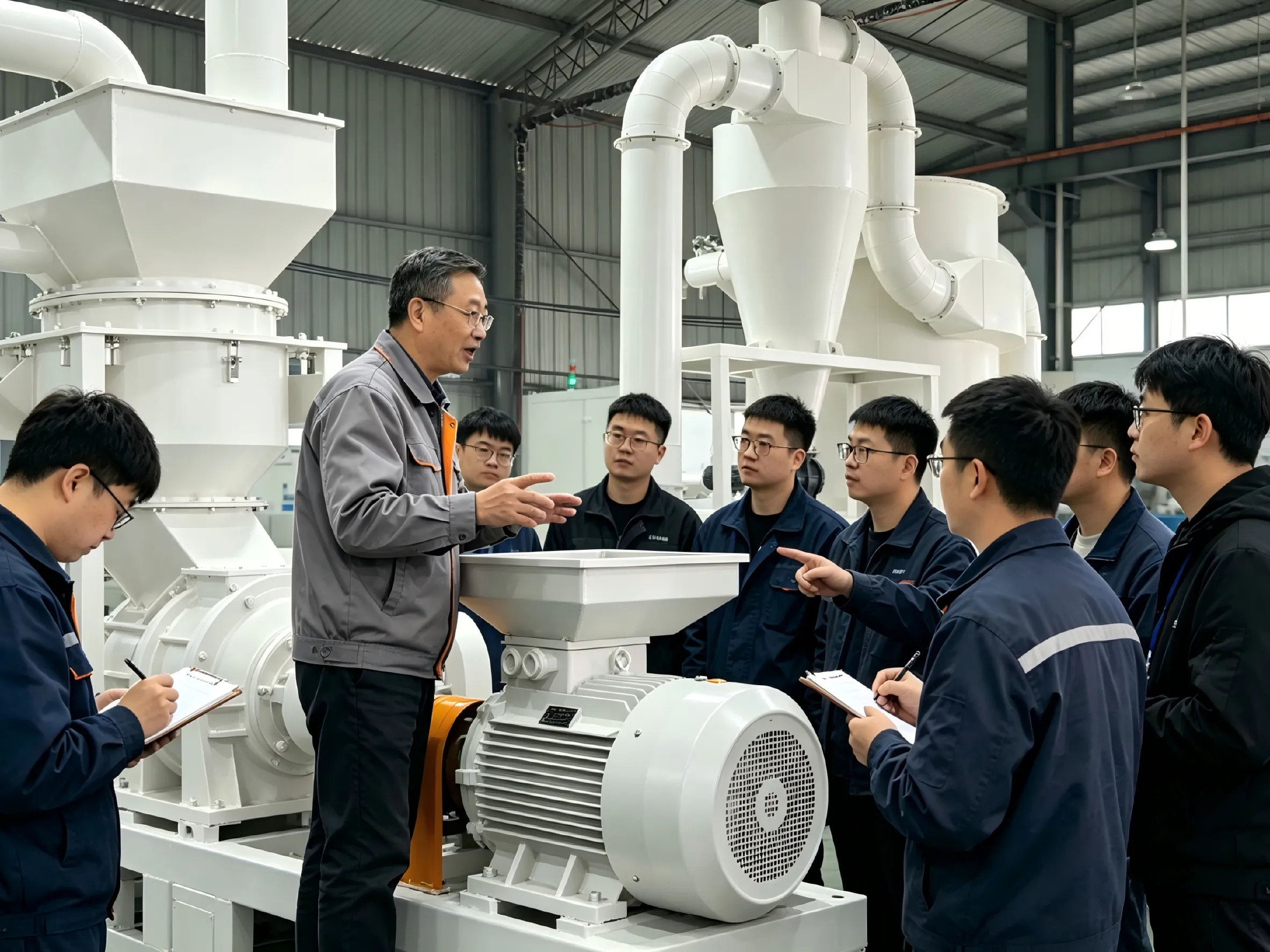
At Xingshengwei, we consider these factors when configuring grinding equipment for different materials and production lines. Our manufacturing and R&D experience in powder processing allows us to provide equipment adjustments based on material properties, fineness requirements, and workshop conditions.
Frequently Asked Questions
1. Why do conventional mills struggle to grind peanuts into fine powder?
Peanuts contain a relatively high amount of natural oil. During grinding, friction and impact release oil that can cause fine particles to stick to chamber walls, screens, and discharge passages. As the required powder fineness increases, material adhesion, temperature rise, and blockage become more difficult to manage.
2. What is the maximum grinding fineness of the Xingshengwei Peanut Ultrafine Grinder?
The equipment supports an adjustable grinding fineness range of 80–600 mesh, equivalent to approximately 180–25 micrometers. The actual particle size distribution depends on the raw material, equipment configuration, and operating conditions.
3. How does the machine prevent peanut powder from sticking to internal surfaces?
It uses an optimized grinding disc structure and airflow circulation system to improve material movement during processing. The cooling structure also helps control temperature, reducing conditions that may contribute to material adhesion. We additionally recommend controlling peanut moisture content to ≤8% before feeding.
4. What is the production capacity of an industrial peanut powder grinder?
The Xingshengwei Peanut Ultrafine Grinder has a specified capacity range of 200–1500 kg/h, depending on the model and processing conditions. For example, a basic model can produce approximately 800 kg/h at 150 mesh and around 500 kg/h at 250 mesh. Actual production capacity should be confirmed through material testing.
5. What materials can be processed besides peanuts?
The equipment is designed for high-oil materials such as sesame and walnuts. It can also process materials including corn, soybeans, dried ginger, and spices, subject to their physical properties and the required grinding configuration.
6. Is the Peanut Ultrafine Grinder suitable for food processing?
The material-contact components are constructed from SS304 stainless steel, and the equipment is manufactured with food-processing applications in mind. Its smooth material-contact construction is intended to facilitate cleaning and reduce material residue. Specific hygiene and compliance requirements should be confirmed according to the intended production application.
7. How often should the grinding components be maintained?
We recommend regularly cleaning the grinding chamber, classification wheel, and pipelines to prevent material accumulation. The hammerheads and grinding discs should be inspected approximately every three months, with replacement based on actual wear. The pulse dust collector filter bags and electrical connections should also be checked regularly.
Conclusion
Peanut ultrafine grinding requires more than conventional crushing force. High oil content, heat generation, material adhesion, and particle size consistency all affect the final powder quality and production stability.
For these reasons, we focus on combining optimized impact grinding, adjustable airflow classification, dual cooling, and efficient dust collection in our Peanut Ultrafine Grinder. With a fineness range of 80–600 mesh and a production capacity of 200–1500 kg/h, Xingshengwei provides a processing solution for peanut powder, peanut meal, and other high-oil material applications.
To discuss your raw material characteristics, target powder fineness, and production capacity requirements, visit Xingshengwei Peanut Ultrafine Grinder or contact our technical team for equipment configuration details.
Related News
- How Low-Temperature Grinding Helps Maintain Chili Powder Color and Fineness
- How Does Chili Ultrafine Pulverizer Improve Spice Processing?
- Why Choose a Fruit Vegetable Ultrafine Pulverizer for Fine Powders?
- How to accurately match ultrafine crushers for your production line?
- How to choose the right ultrafine pulverizer for your industrial production? Core Guidelines for Cross border Procurement
- How does Xingshengwei Machinery define the new standard for modern ultrafine grinding
Leave me a message


News Recommendations