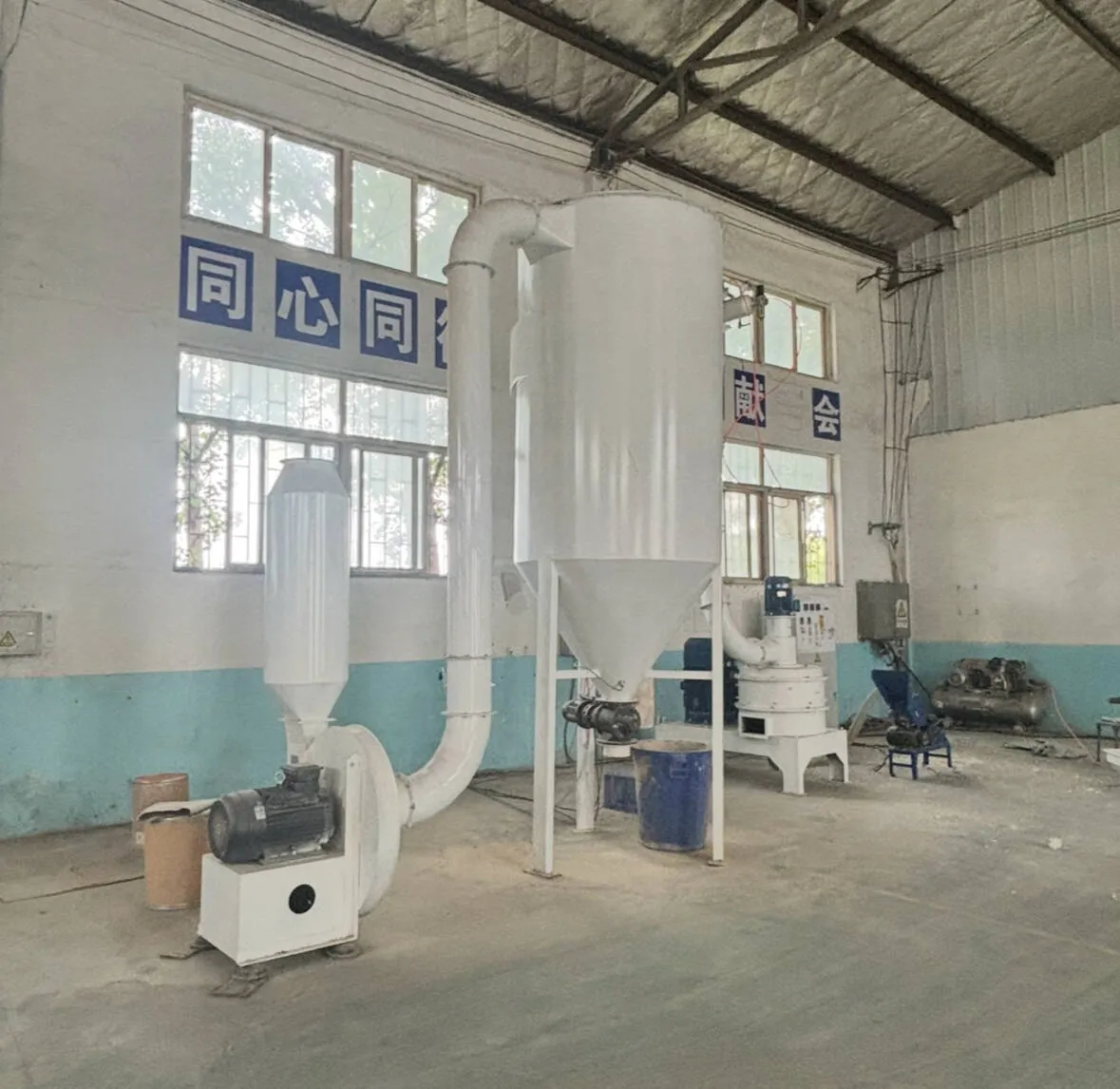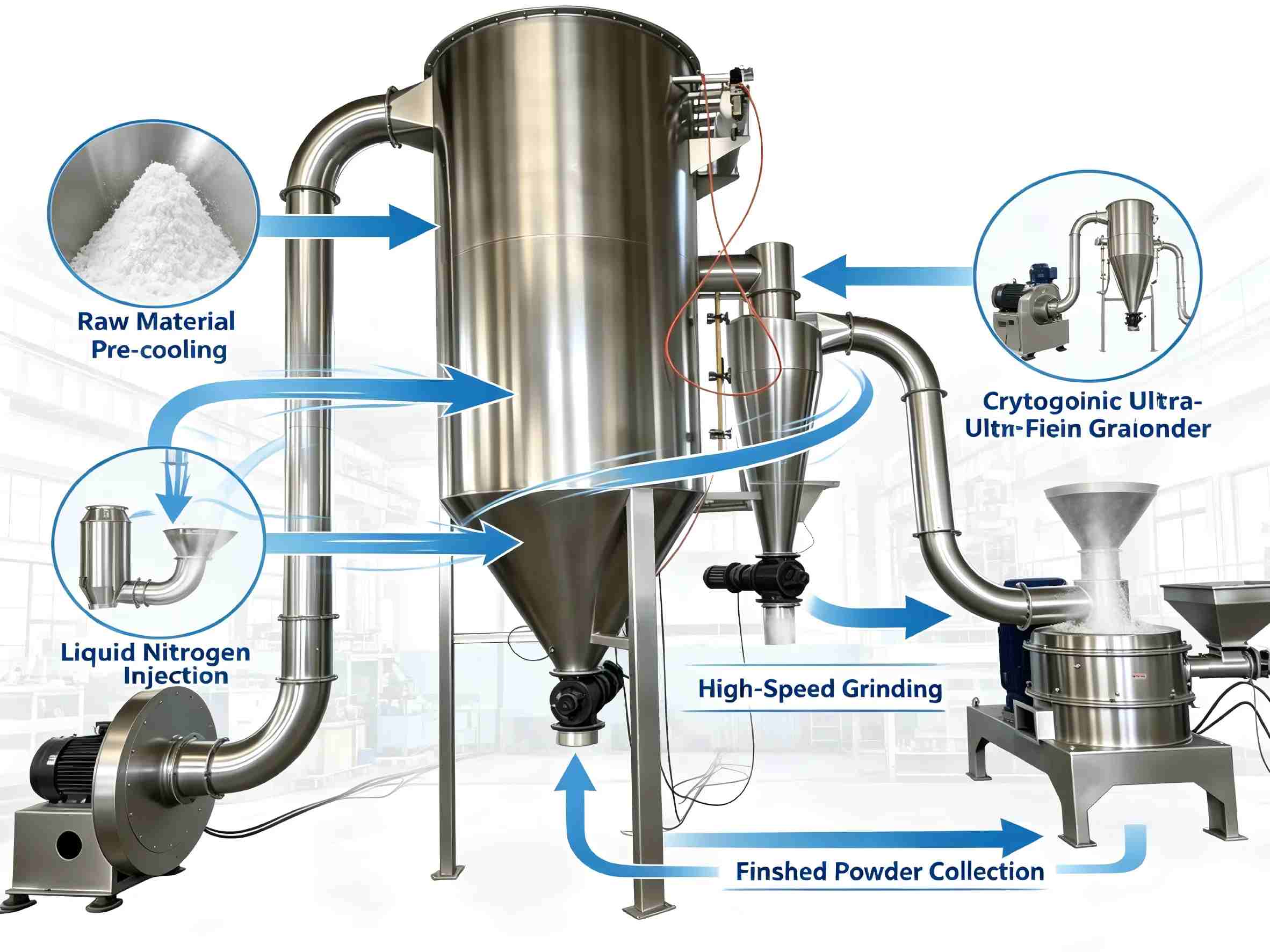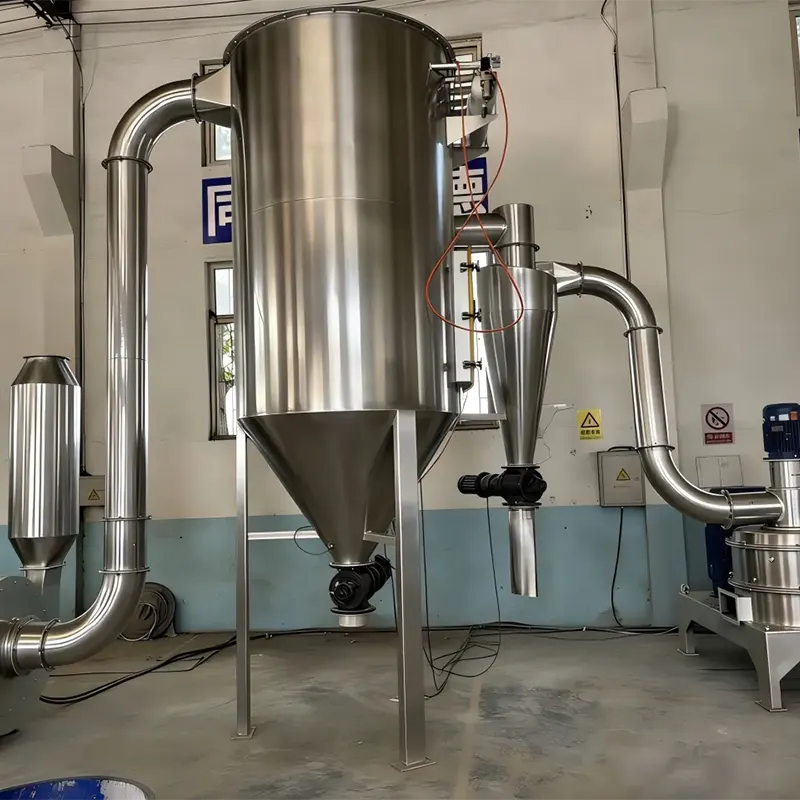


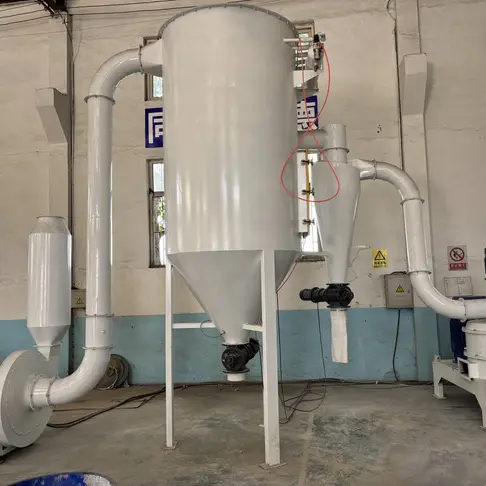
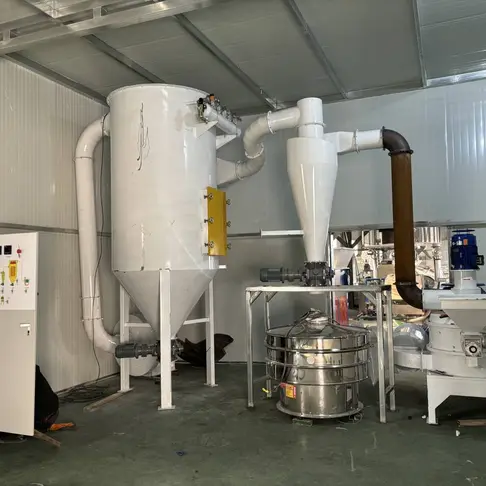
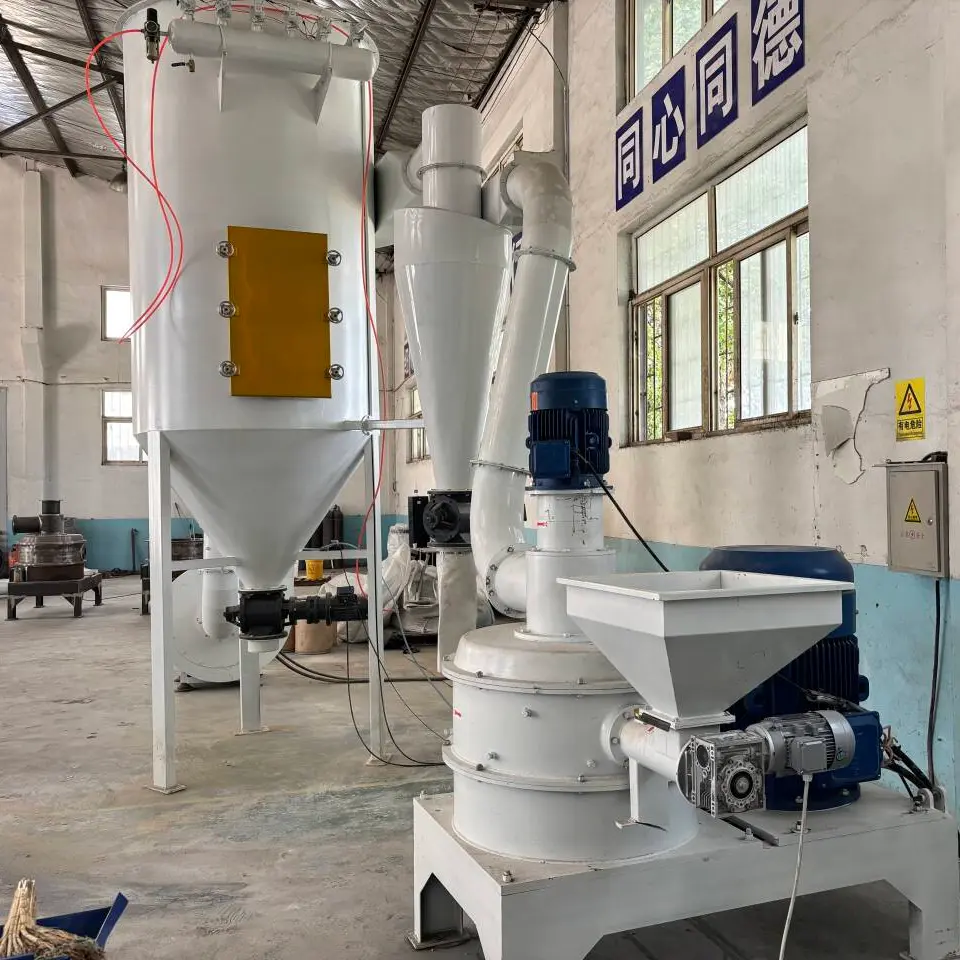
Feed Raw Material Ultrafine Grinder
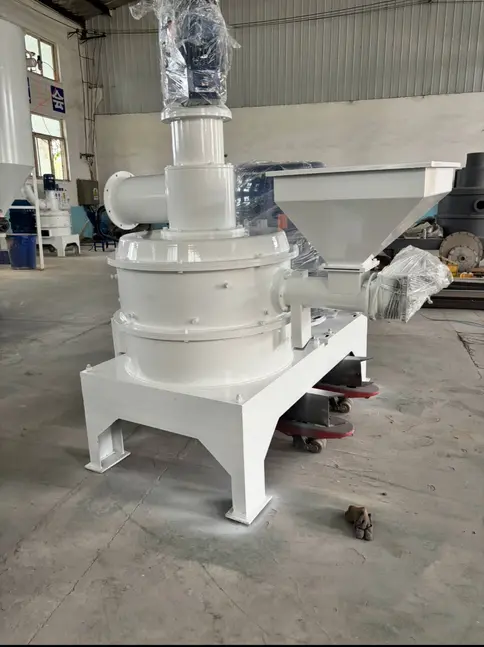
XSW Machinery is a China manufacturer of the feed raw material ultrafine grinder, a vertical-shaft impact mill that grinds corn, soybean meal, fishmeal, meat-and-bone meal and fibrous by-products to a set particle size. Rotor speed and classifier opening are adjusted from the touch screen, so the cut point moves without a screen change. Frames run from 50 kg/h to about 3 t/h.
Every feed raw material ultrafine grinder from XSW Machinery is matched to the material list before the price is confirmed. Our laboratory in Chengyang District, Qingdao keeps grinding data on more than ten thousand materials, and we run your sample at two or three cut points so the particle distribution, outlet temperature and hourly output are measured rather than assumed. Standard frames leave the workshop in 7 to 15 working days. Export crating is fumigated plywood with the chamber oiled and the classifier motor braced. One machine is enough to open an order, pricing is direct from the factory, and an inspection before dispatch can be arranged.
Core Advantages
Cut point set on screen. Change from 60 to 200 mesh without stopping the line or fitting a screen, which is what a mill running four formulas a week actually needs.
Fibre stays in the shear zone. A toothed ring around the rotor holds bran and feather meal long enough to break, instead of letting them ride over the hammers.
Cool powder at the outlet. High-volume air flow through the chamber keeps the discharge under the point where vitamins and live cultures start to fall away.
Narrow distribution. The classifier returns oversize particles instead of passing them, so a 120 mesh batch does not arrive with an 80 mesh tail.
Quick-open chamber. Pneumatic hinge, polished walls at Ra 0.4 µm, no bolt pockets: two operators clean down in under 30 minutes.
Honest wear figures. Hardened alloy hammers, 800 to 1000 hours on grain and 300 to 500 hours on mineral premix, quoted as two numbers rather than one.
Test sheet with every unit. Load run, sieve check, noise and power draw recorded and filed against the serial number.
Material Behaviour
Fibrous inputs
Bran, straw-based fibre and feather meal resist a single impact. The chamber keeps them in contact with the toothed ring for several passes, and the classifier only releases what is fine enough, so fibre is cut rather than flattened.
Oily inputs
Oil-rich material smears the grinding track once the chamber warms, and a blinded track overheats the powder. The air stream removes that heat before it becomes a problem, which is why fat content above roughly 12 percent needs a wider chamber rather than a bigger motor.
Premix and additives
Minerals, vitamins and cultures are dosed in small amounts, so the grinding step must not change their activity. Low outlet temperature, short residence time and instant discharge do that work; the report records the outlet reading at each trial cut.
Technical Specifications
Dimensions and weights below are reference figures for the standard frame and are confirmed on the general arrangement drawing issued with the order. Output is stated on grain and meals at 80 to 120 mesh.
| Parameter | XSW-50 | XSW-75 | XSW-110 |
| Main motor | 22-45 kW | 55-75 kW | 132-160 kW |
| Output, grain and meals | 50-400 kg/h | 200-1200 kg/h | 1000-5000 kg/h |
| Feed inlet | 200 x 200 mm | 250 x 250 mm | 350 x 350 mm |
| Discharge outlet | Ø200 mm | Ø250 mm | Ø350 mm |
| Overall dimensions, L x W x H | 2600 x 1600 x 2300 mm | 3000 x 1800 x 2600 mm | 3800 x 2100 x 3200 mm |
| Net weight | 1800 kg | 3200 kg | 5800 kg |
| Air volume | 30-45 m³/min | 70-95 m³/min | 200-260 m³/min |
| Classifier drive | Independent VFD | Independent VFD | Independent VFD |
| Noise at 1 m | below 78 dB(A) | below 80 dB(A) | below 82 dB(A) |
Heat-Sensitive Premix
Premix complaints about lost potency are usually temperature complaints. Vitamin C and several B vitamins fall away quickly above 60 °C, and live cultures lose counts when outlet air stays warm for hours.
Air-cooled circulation. No chiller circuit needed; the air stream carries heat out of the chamber continuously.
Short residence time. Powder spends seconds in the chamber rather than minutes, so heat has little time to act.
Immediate discharge. Powder leaves into a sealed container instead of sitting in a hot hopper.
Recorded outlet temperature. Each trial cut reports the actual reading, so the limit in your specification can be checked against it.
Factory Test Records
Nothing leaves Qingdao without a load run, and the sequence is fixed rather than discretionary.
No-load check. Bearing temperature and vibration logged before any material goes in.
Load run. Production run on customer material, or on a sample we have tested when the customer ships one.
Sieve check. Finished powder checked against the agreed cut, with the sieve set recorded.
Noise and power. Measured at the working point and written on the test sheet that travels in the crate.
Feed, Dust and Discharge
A grinder that performs on the test bench can still disappoint if the feeding is uneven or the ducting is wrong.
Feeder sizing. Screw feeder or pneumatic lifter driven by a VFD, matched to the mill's appetite rather than to the silo.
Ducting. Short and vertical, no flat runs where powder can settle.
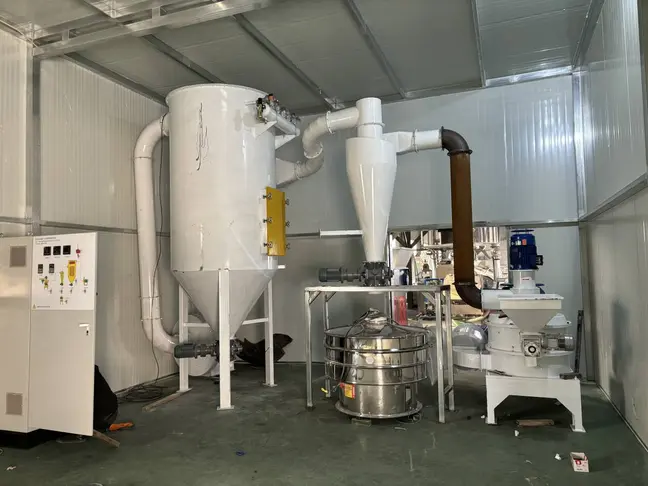
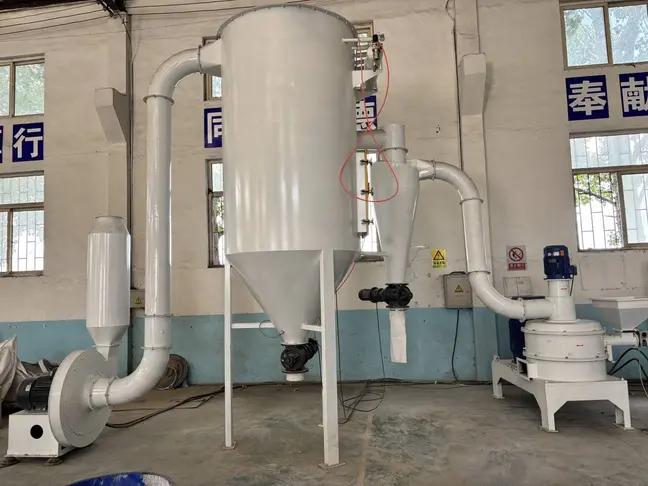
Dust collection. Pulse-jet filter sized to the mill's air volume, holding stack emission under 8 mg per cubic metre, which is where most dust complaints on a feed raw material ultrafine grinder is actually settled.
Discharge. Rotary valve into a sealed container, so the packing area stays clean.
Client Case
A compound feed producer in Southeast Asia took a batch order in 2026 for aquaculture and poultry lines, where the same building runs several formulas across the week. The configuration and the result are summarised below.
Configuration. XSW-75 frame with VFD feeder, pulse-jet collector and rotary discharge.
Materials in service. Fishmeal, soybean meal, corn and a mineral premix, run on the same chamber.
Cut points used. 120 mesh for aquafeed mash, 200 mesh for the premix line.
Result at commissioning. Fineness held across a full shift, changeover between formulas under 30 minutes, no dust escape recorded at the packing point.
After-sales path. Remote diagnostics through the IIoT module during the first production month, spare hammer set shipped from stock.
Packing and Documents
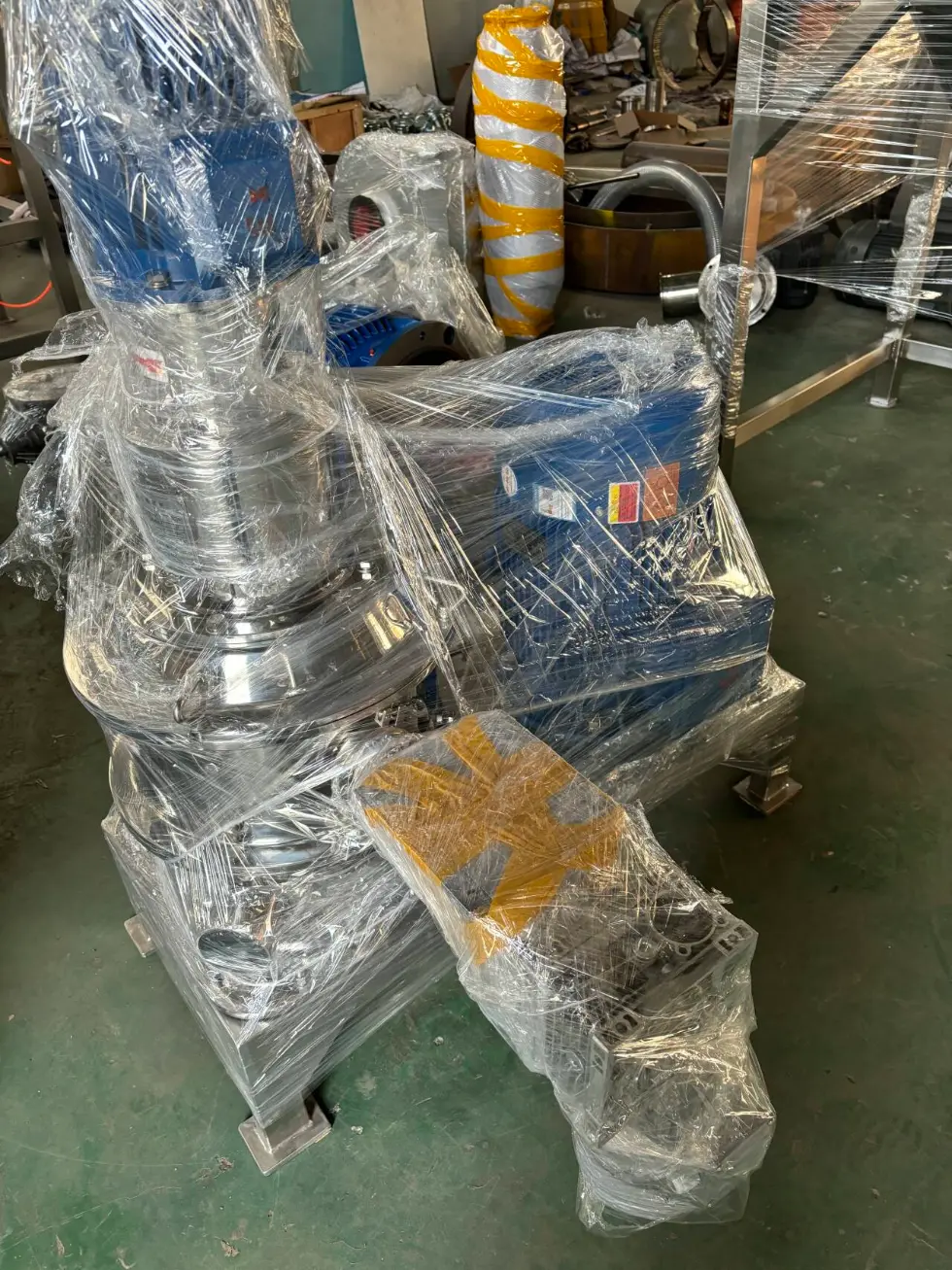
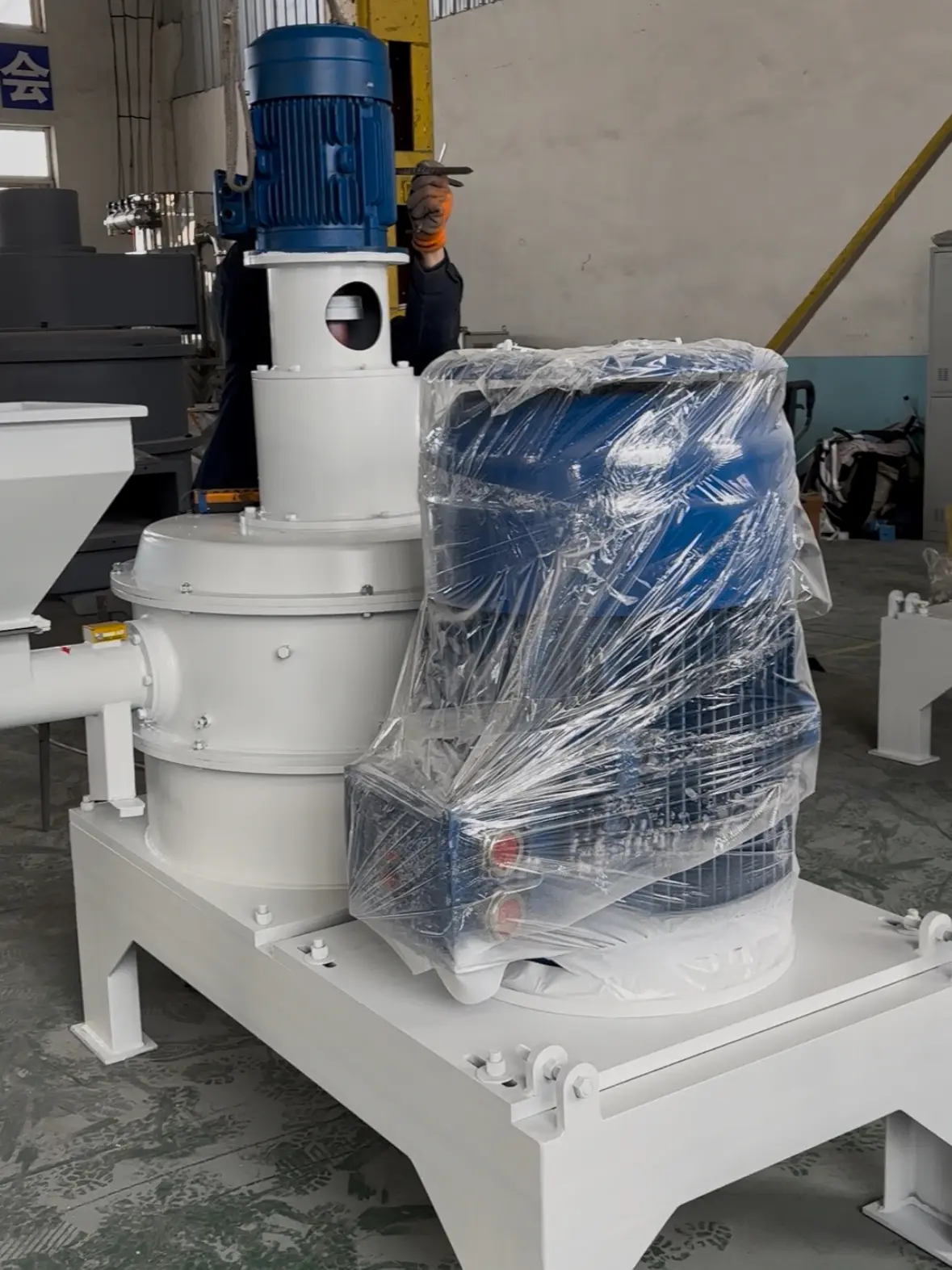
Each set ships in a fumigated plywood case with a moisture barrier against sea air.
Securing. Rotor locked, classifier motor braced separately, chamber oiled for transit.
Documents. Packing list, commercial invoice, certificate of origin, test report, wiring diagram with trial parameters.
Spares in the crate. One spare hammer set, classifier blades and seals, labelled by position.
Parts file. Kept against the serial number, so a repeat order years later still matches.
FAQ
Q1: Can one machine cover coarse mash and 200 mesh premix
A: Yes, inside its power band. The classifier sets the cut, so the same feed raw material ultrafine grinder runs 60 mesh for mash and 200 mesh for premix, with output roughly halving at the finer point. Both figures are quoted rather than the better one.
Q2: How long does cleaning take between medicated and plain batches
A: Two operators clear the track, classifier and discharge in under 30 minutes without tools. A cleaning record sheet can be supplied if your quality system asks for one.
Q3: What voltage can be supplied
A: 380 V 50 Hz as standard, plus 220 V, 415 V, 440 V 60 Hz and dual-voltage cabinets on request. Panel labels are English, with Spanish, Russian or Arabic overlays available.
Q4: What is the minimum order for a trial
A: One unit. Mills testing a new formula usually start with an XSW-50 and add a larger frame once the powder specification is settled.
Q5: How are spare parts handled years later
A: Hammers, blades, seals and bearings are standard stock items. We keep a parts file per serial number and ship by air express, usually inside a week. A feed raw material ultrafine grinder from a 2021 order still matches today.
Q6: What is the minimum order quantity?
A: The minimum order quantity is 1 set of machinery. You can purchase one unit for an initial production trial or to evaluate its suitability for your raw materials before considering additional equipment.
Send Inquiry
Contact Info
-
Address
Beiwan Community, Jihongtan Sub-district, Chengyang District, Qingdao City, Shandong Province, China
-
Tel
-
Email
If you have any enquiry about quotation or cooperation, please feel free to email us at starwinmill@163.com or use the following inquiry form. Our sales representative will contact you within 24 hours. Thank you for your interest in our products.


News Recommendations